Sports Wellness: 7 Pillars for Peak Performance
A seven-pillar system for aligning recovery, mental health, workload and career habits without relying on vague wellness advice.

Peak performance depends on more than training quality. Build a system that protects your availability, sharpens daily decisions, and detects problems before they become missed games, compromised development, or lost career value.
Pas le temps de lire ?
- Effective wellness is a performance system built around sleep, nutrition, recovery, mental health, injury prevention, relationships and career stability.
- Track a small daily dashboard: sleep duration, perceived recovery, soreness, mood and training load.
- No universal score guarantees readiness because baselines and warning thresholds vary by athlete, sport and season.
- Establish a 14-day personal baseline, then review deviations with qualified performance and medical professionals.
- Escalate persistent pain, severe fatigue, major mood changes or declining function instead of attempting to optimize through them.
What separates a performance system from generic self-care?
The verdict is simple: sports wellness is the disciplined integration of health, readiness, and life stability. It is not a collection of comfort habits performed when convenient.
A serious performance system connects training demands with recovery capacity, psychological state, relationships, and career pressures. That broader view of athlete wellness protects two assets: availability and decision quality. It helps an athlete recognize when to push, adjust, or seek expert support. No protocol can guarantee peak output or prevent every injury. The objective is to improve the probability of consistent performance while reducing avoidable risk.
Which seven pillars protect performance and career longevity?
The NCAA Mental Health Best Practices, Second Edition was updated in 2024 to support an environment that promotes mental health and physical well-being.
Source: NCAA.
The seven pillars of athlete wellness operate as one system:
- Sleep: Protect a consistent sleep window and track disruptions, not just total time.
- Nutrition and hydration: Match intake to training demands, travel, climate, and competition timing.
- Workload and recovery: Compare recent load with perceived readiness before adding intensity.
- Injury prevention: Maintain strength, mobility, technique, and early symptom reporting.
- Mental health: Use regular check-ins and establish access to qualified support before a crisis.
- Social support: Keep trusted relationships outside the immediate performance hierarchy.
- Career and financial stability: Review contracts, cash flow, education, and post-sport options with appropriate professionals.
Each pillar affects the return produced by the others. Better nutrition cannot fully compensate for chronic sleep disruption. Advanced sports recovery technology has limited value when pain is concealed or workload is poorly managed. Financial instability can damage concentration, while isolation can delay reporting of physical or psychological symptoms. The competitive advantage comes from removing the weakest constraint, not endlessly optimizing the strongest pillar.
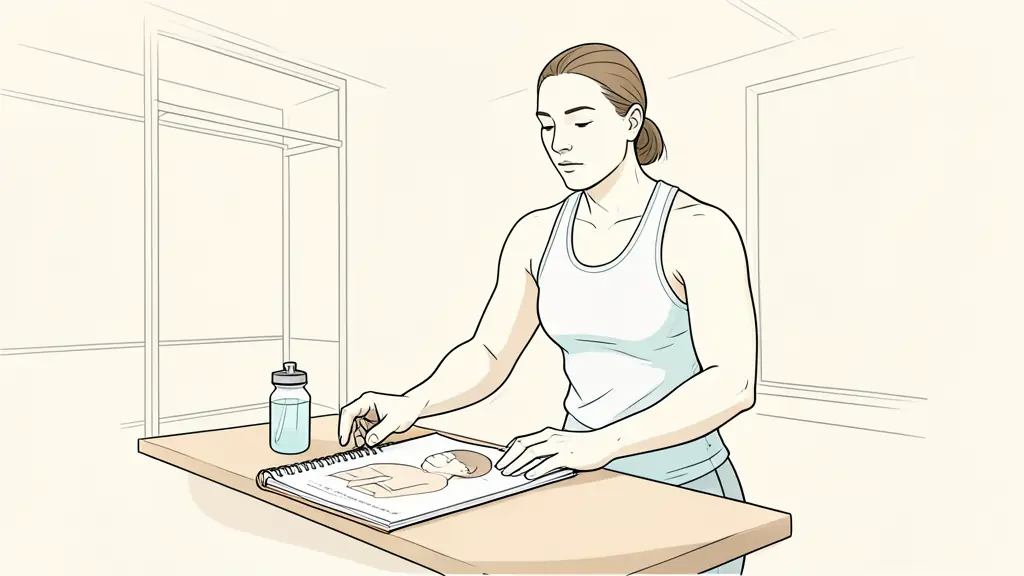
What should an athlete measure without creating data overload?
Adults should sleep 7 or more hours per night on a regular basis to promote optimal health, according to the 2015 joint recommendation.
Source: American Academy of Sleep Medicine and Sleep Research Society.
A compact athlete performance monitoring dashboard needs six inputs:
| Metric | Practical measure | Decision value |
|---|---|---|
| Sleep duration | Hours slept | Identifies insufficient or disrupted recovery |
| Recovery rating | Daily 1 to 5 score | Captures perceived readiness |
| Soreness | Daily 1 to 5 score plus location | Flags accumulating physical stress |
| Mood | Daily 1 to 5 score | Supports awareness of mental health in athletes |
| Session load | Duration combined with perceived intensity | Adds context to fatigue |
| Sport-specific output | One repeatable performance measure | Tests whether readiness affects execution |
Interpret these measures against the athlete’s own baseline, not another player’s score. Review rolling trends rather than reacting to one poor morning. Consumer wearables can estimate patterns, but their outputs are not diagnoses and should not override symptoms, coaching context, or clinical assessment. The dashboard should clarify decisions, not create another competition for perfect numbers.
How can athletes turn the seven pillars into a weekly protocol?
The 2015 adult sleep recommendation identifies 7 or more hours per night on a regular basis as the threshold associated with optimal health.
Source: American Academy of Sleep Medicine and Sleep Research Society.
Use a repeatable sports recovery cycle that fits around training:
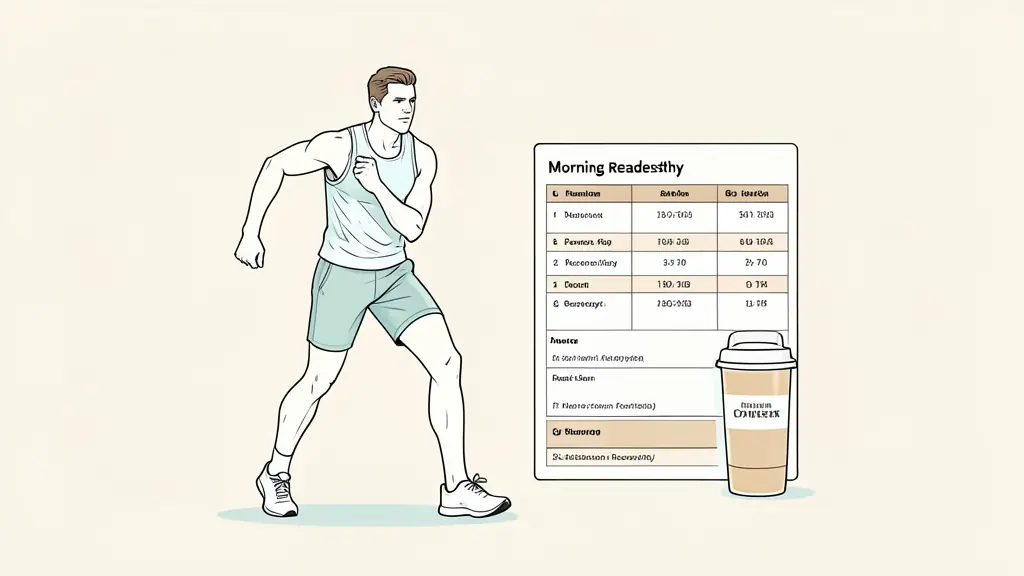
- Morning: Complete a one-minute check-in covering sleep, soreness, mood, and readiness.
- Before training: Compare the check-in with the planned session and recent workload.
- After training: Begin refueling and hydration according to the session and the athlete’s nutrition plan.
- Evening: Reduce stimulation, prepare the sleep environment, and note unresolved pain or stress.
- Weekly: Review trends, missed sessions, sport-specific output, and adherence with the performance team.
Apply a simple traffic-light framework. Green means metrics are near baseline and normal preparation continues. Amber means several measures are deteriorating, so context and closer observation are required. Red means severe symptoms, sharp functional decline, or a sustained multimetric change that requires escalation.
This framework makes athlete performance monitoring operational, but it does not authorize independent medical decisions. Workload changes should be coordinated with qualified coaches. Diagnosis, treatment, and return-to-play decisions belong with qualified clinicians.
Which warning signs require more than a recovery adjustment?
The NCAA Mental Health Best Practices, Second Edition provides updated guidance for supporting student-athlete mental health and well-being, 2024.
Source: NCAA.
Temporary fatigue usually improves after appropriate rest and produces a predictable response to training. Escalate when symptoms persist, intensify, or impair normal function:
- Pain that changes movement or does not settle
- Declining training or competition function
- Repeated sleep disruption
- Emotional volatility outside the athlete’s normal pattern
- Withdrawal from teammates or trusted relationships
- Sustained loss of motivation or enjoyment
The NCAA framework supports treating mental health in athletes as a health, safety, and availability issue. These signs call for communication with qualified medical or mental health professionals, not a toughness test or an improvised recovery intervention.
How do you know whether the system is improving performance?
Run a four-week review using five questions:
- Adherence: Was the protocol followed consistently enough to evaluate?
- Availability: Did missed or modified training time decrease?
- Symptoms: Are pain, soreness, sleep, and mood trends improving?
- Readiness: Does perceived readiness better match actual capacity?
- Output: Is the selected sport-specific measure stable or improving without worsening symptoms?
Do not reward a system merely for generating data. Keep interventions that improve decisions, preserve availability, or expose useful patterns. Remove metrics that create noise, anxiety, or duplicated information. Share material changes with the athlete’s performance and medical team so training, recovery, and care decisions remain aligned.
FAQ
What does wellness mean for an athlete?
It is the coordinated management of physical recovery, mental health, training stress, nutrition, relationships and career demands to support performance and availability.
How often should athletes track wellness?
A brief daily check-in is useful when the same measures and conditions are maintained. Trends across several days are generally more informative than one isolated score.
Which wellness metrics matter most?
Sleep duration, perceived recovery, soreness, mood, session load and performance output form a practical core. Additional technology should solve a specific decision problem.
Can a wearable determine whether an athlete should train?
No. Wearable data can inform a decision, but device limitations, individual variation, symptoms, workload context and professional judgment must also be considered.
When should an athlete seek professional support?
Persistent pain, impaired function, sustained sleep disruption, severe fatigue, significant mood changes or thoughts of self-harm require prompt evaluation by an appropriate professional.
Envie d'aller plus loin ?
Laisse ton email, on te prévient dès qu'un nouvel article sort.